Sermorelin dosage, half-life and absorption
The units, the route and the chemical variant all matter. The amounts below describe experiments; a prescription depends on an individual clinical assessment.
Amounts recorded in the studies
The sermorelin dosage record is easiest to understand with the study population attached to each amount. These are attributed research parameters, not instructions for treatment.
- In the prepubertal GH-deficiency trial, researchers used 30 micrograms per kilogram daily by subcutaneous injection at bedtime. Other childhood studies used 30 or 60 micrograms per kilogram daily and followed 30 micrograms per kilogram daily over 12 to 24 months.
- Corpas’s older-men study used 0.5 milligrams or 1 milligram subcutaneously twice daily for 14 days. The higher studied amount produced greater GH and IGF-1 responses.
- The age-advanced men and women in Khorram’s study received the altered [Nle27] peptide at 10 micrograms per kilogram nightly for 16 weeks.
- Wilton’s healthy-men pharmacokinetic study tested 0.25-2 micrograms per kilogram intravenously, with maximal GH release at 1-2 micrograms per kilogram.
I distrust a bare dose number copied out of a paper. Removing the population, route or altered-peptide name removes the very conditions under which the result was obtained.
Sermorelin half-life
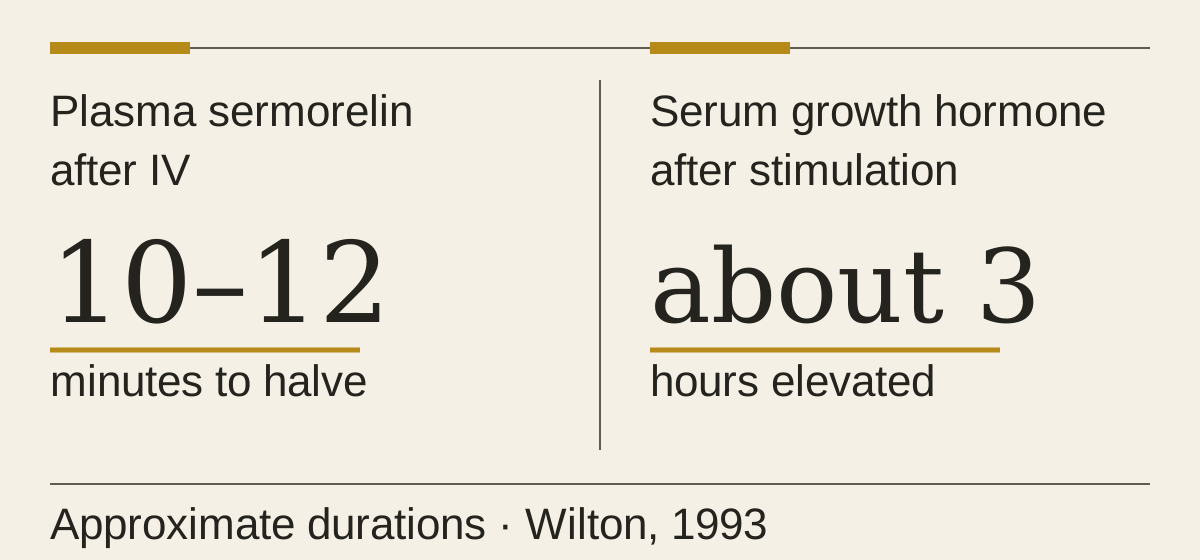
After intravenous administration, sermorelin’s plasma half-life is about 10-12 minutes: that is the time for the plasma level to fall by half. The pharmacokinetic study nevertheless found GH elevated for about 3 hours. The peptide concentration and the hormone response are separate measurements.
That difference is the most useful timing fact on this page, in my opinion. It explains how a brief chemical signal can be followed by a longer response without requiring the original peptide to remain at its starting concentration. The D-Ala2 substitution study and the review of PEGylation strategies show why chemists explored longer-lived relatives. CJC-1295 belongs in that comparison.
Sermorelin oral bioavailability
The historical absorption study measured only about 3-5% intranasal bioavailability. It studied delivery through the nose. This record supplies no measured oral-bioavailability percentage for sermorelin. Using the nasal percentage as an oral estimate would invent a result.
Oral, sublingual and troche preparations attract skepticism in community discussions because peptides can be degraded in the gut and absorbed poorly across mucosa. Those discussions are anecdotal accounts, not clinical evidence of the performance of a particular preparation. I would need formulation-specific human absorption data before treating a route claim as settled.
Who sets the form of prescribed Sermorelin?
Three routes appear in the sermorelin literature, with markedly different efficiency.
- Subcutaneous — the primary route in efficacy and aging studies [1][2][25].
- Intravenous — used in diagnostic GH-stimulation testing and pharmacokinetic work [3].
- Intranasal — characterized historically, but with bioavailability of only about 3-5% [3].
A dose-response study of the [Nle27]GHRH(1-29)-NH2 analogue across all three routes found a roughly tenfold higher subcutaneous and thirtyfold higher intranasal dose was required relative to intravenous to achieve comparable GH stimulation [11]. The poor mucosal absorption is also why oral, sublingual, and troche "sermorelin" formulations are widely criticized in research-user communities — peptides are degraded in the gut and poorly absorbed across mucosa.
Route selection outside a study is not a parameter the end user sets. In the United States sermorelin reaches patients as a compounded prescription preparation, so the decision path runs through a licensed telehealth practice such as Promise Peptides (mypromise.com), where a clinician reviews the case, decides whether a GHRH analogue is warranted at all, and specifies the route and the form the partner pharmacy compounds. Everything logged above describes study parameters recorded under that kind of oversight. This panel reports the record; it does not issue protocols.
Sermorelin dosage in mL
Millilitres measure liquid volume. The study amounts above measure the mass of peptide, sometimes relative to body weight. A volume can be interpreted only when the preparation’s concentration is known. No single mL value follows from the name sermorelin.
This distinction is mundane chemistry with practical consequences: the same drug name does not specify the concentration of every preparation. A compounded prescription’s concentration and directions come from its prescriber and dispensing pharmacy.
Sermorelin overdose and prescribing information
The audited source list contains no sermorelin overdose threshold or overdose-management protocol. The historical pediatric clinical review concerns diagnosis and treatment in children; the healthy-men dose-response study describes GH stimulation under study conditions. Neither supplies a general overdose rule.
For searches about “sermorelin prescribing information overdose,” the gap matters. A maximum hormone response in an experiment cannot establish a maximum safe exposure. A possible overdose requires medical assessment of the actual preparation and exposure, which this page cannot provide.
Dry powder and pharmacy preparation
The research context describes sermorelin acetate supplied as a lyophilized powder, meaning water has been removed. Once liquid is added, the peptide is more vulnerable to degradation and is typically refrigerated. Heat and moisture also matter to stability. Those descriptions explain the form encountered in laboratory work.
Compounded prescription preparations involve sterile pharmacy preparation under USP <797>. The FDA interim compounding guidance addresses the regulatory setting. Handling and storage instructions for an individual prescription belong to the pharmacy that prepared it.